
1907 saw pétanque gain popularity in the south of France, amongst other variations of the game involving running starts and hurling steel balls 25 metres.
Slightly less ambitious in scale, although still involving steel balls, pétanque now boasts over 17 million players in France alone, as well as healthy numbers in many countries around the world. In fact, you’ve probably played something resembling pétanque before without realising it.

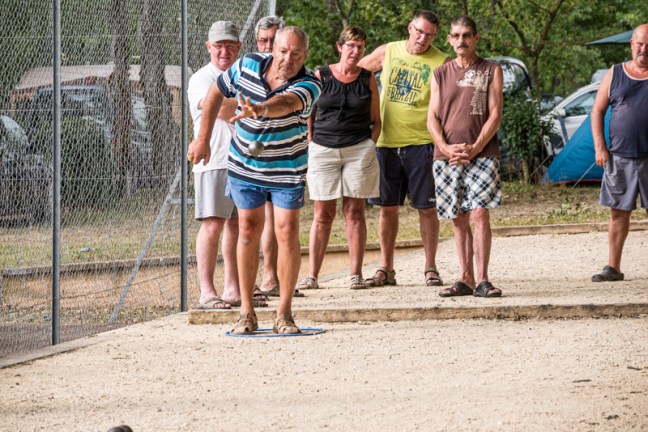
The game can be played virtually anywhere; the French play on dusty village squares whilst here in the UK we tend to play on prepared gravel pitches, but a patch of grass or even the beach can make for an interesting game.
Once you’ve settled on the area where your game is to be played, known as the terrain, the fundamental aim of petanque is to get your steel balls, or boules, as close as possible to a smaller ball called a jack, or coche, and that’s it.
However, these boules are similar in size to a cricket ball and weigh around 700 grams each, so you’ll have to carefully consider each attempt so you don’t fall short or fly past the jack.
You can throw or roll your boules any way you like, but remember to bear in mind the terrain you’re playing before letting go.
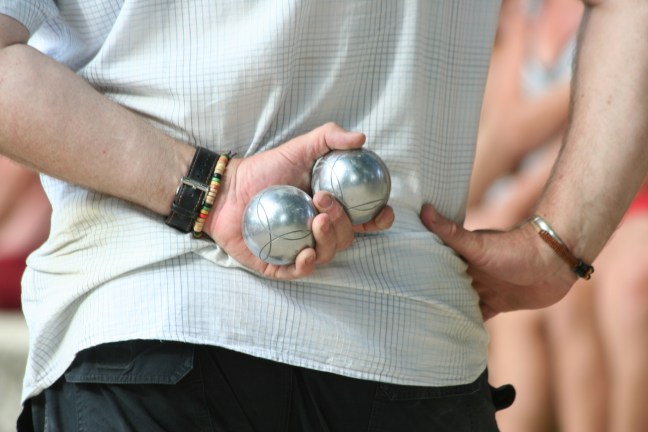
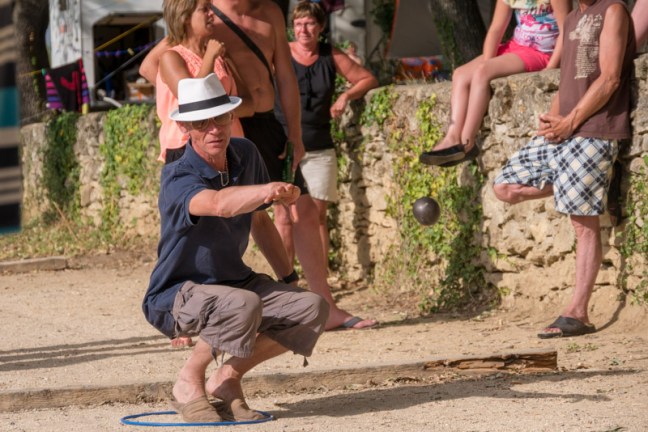
Most players prefer to throw their boules underarm and palm down, letting the boules roll out of their hand. This gives them a natural backspin with the intention of making their trajectory more predictable.
However, your opponent can attempt to ‘shoot’ by throwing their boules directly at yours, knocking them away from the jack and stealing your hard earned points.
The premise of pétanque is simple, but the game can take years to master. Often compared to chess but played with steel balls; from casual games of pétanque to the highest levels of competition the result is always in doubt until the last boule is thrown.
 Leeds Pétanque